
Top 10 Best 0% Balance Transfer Credit Cards in the UK (2026)


UK Startup Blog Archive
Table of Contents
The best 0% balance transfer credit card is usually the lowest-fee option that gives the cardholder enough time to repay the transferred debt in full. A longer interest-free period can reduce the monthly amount needed, but it often comes with a higher one-off transfer fee, so the longest deal is not automatically the cheapest.
A balance transfer moves existing credit or store-card debt to another credit card, usually with a promotional 0% interest period. The objective is to reduce interest costs while repaying the underlying balance.
What Are the Best 0% Balance Transfer Credit Cards?
The best deal depends on how quickly the borrower can realistically clear the debt. Rather than automatically choosing the longest promotional period, the better approach is to find the lowest total transfer cost with enough interest-free time to complete repayment.
Balance Transfer Decision Guide
| Repayment Position | Likely Better Fit | Main Factor To Check |
| Debt can be cleared quickly | Shorter no-fee 0% card | Whether the entire balance can be repaid within the offer |
| Around 12–24 months needed | Low-fee 0% card | Fee versus additional repayment time |
| Several years needed | Longer 0% card | Transfer fee and required monthly repayment |
| Eligibility is uncertain | Eligibility check before applying | Likely acceptance and available promotional terms |
Current UK offers demonstrate why this distinction matters: long promotional periods can extend to up to 38 months, while shorter alternatives may reduce or remove the balance-transfer fee.
The most suitable card is therefore the one whose cost and repayment window fit the borrower’s circumstances.
Top 10 Best 0% Balance Transfer Credit Cards In The UK
The strongest options range from very long 0% periods for borrowers who need more repayment time to shorter fee-free cards for those who can clear their balance more quickly. The comparison should therefore consider the promotional period and transfer cost together rather than ranking cards on duration alone.
1. TSB Platinum Balance Transfer Card
Best For: The Longest Advertised 0% Period
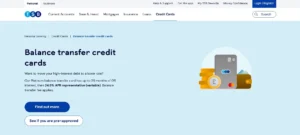
The Platinum Balance Transfer Card currently offers up to 38 months at 0% on qualifying balance transfers, making it the longest publicly advertised period in this comparison. A 3.49% transfer fee applies to balances moved within the first 90 days.
Current Deal Snapshot
| Feature | Details |
| 0% Balance Transfer Period | Up to 38 months |
| Balance Transfer Fee | 3.49% |
| Representative APR | 24.9% variable |
| Transfer Window | First 90 days |
| Transfer Limit | £100 minimum, up to 95% of credit limit |
Why It Stands Out?
The maximum 38-month period provides the longest repayment runway here, although the transfer fee is also among the higher charges in the comparison.
Key Features
- Transfers must be completed within the first 90 days to receive the promotional terms.
- The precise promotional period, credit limit and interest rate can vary according to individual circumstances.
Who May Find It Suitable?
It may suit borrowers with larger balances who value additional repayment time more than minimising the initial transfer fee.
What To Check Before Applying?
Applicants should not assume they will receive all 38 months, as the issuer explicitly states that promotional periods vary according to circumstances.
2. HSBC Balance Transfer Credit Card
Best For: A Long Period With A Competitive Fee
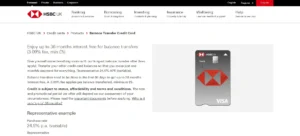
This card currently provides up to 36 months at 0%, with a 3.09% transfer fee subject to a £5 minimum. Qualifying transfers need to be made within 60 days of opening the account.
Current Deal Snapshot
| Feature | Details |
| 0% Balance Transfer Period | Up to 36 months |
| Balance Transfer Fee | 3.09%, minimum £5 |
| Representative APR | 24.9% variable |
| Transfer Window | First 60 days |
| Annual Fee | £0 |
Why It Stands Out?
The 3.09% fee is lower than several other cards offering a similar maximum 0% period. On £5,000 transferred, that percentage would equal £154.50.
Key Features
- Qualifying balance transfers must be made within 60 days.
- Purchases receive a separate three-month 0% introductory period.
The current promotional transfer terms confirm both the 60-day window and the 3.09% fee.
Who May Find It Suitable?
It may suit someone who needs close to three years to repay but also wants to keep the transfer fee relatively controlled.
What To Check Before Applying
The maximum 36-month period is not guaranteed for every applicant, so the actual offer should be confirmed before proceeding.
3. NatWest Longer Balance Transfer Card
Best For: A Long Repayment Window With Clear Limits
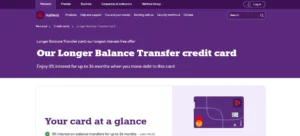
This card offers up to 36 months at 0% with a 3.10% transfer fee. The actual interest-free period can range from 16 to 36 months following the credit assessment.
Current Deal Snapshot
| Feature | Details |
| 0% Balance Transfer Period | 16–36 months |
| Balance Transfer Fee | 3.10% |
| Representative APR | 24.9% variable |
| Transfer Window | First 3 months |
| Transfer Limit | £100 minimum, up to 95% of credit limit |
Why It Stands Out?
Its transfer fee remains comparatively close to the lowest charges among the longest-duration cards while allowing up to three years interest-free.
Key Features
- Transfers must be made within three months of account opening.
- Balances from cards within the same banking group cannot be transferred.
The issuer states:
“Your 0% offer on balance transfers could be between 16 and 36 months.”
The full balance transfer conditions also confirm the 95% maximum transfer limit.
Who May Find It Suitable?
It may suit borrowers who need substantial repayment time but are comfortable with an offer whose exact duration is personalised.
What To Check Before Applying
The repayment plan should work with the actual promotional period offered rather than automatically assuming 36 months.
4. Barclaycard Platinum Balance Transfer Card
Best For: Another Competitive Three-Year Option
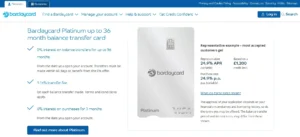
The Platinum balance-transfer product currently advertises up to 36 months at 0% with a 3.15% fee. Qualifying transfers must be completed within 60 days to receive the introductory offer.
Current Deal Snapshot
| Feature | Details |
| 0% Balance Transfer Period | Up to 36 months |
| Balance Transfer Fee | 3.15% |
| Representative APR | 24.9% variable |
| Transfer Window | First 60 days |
| Offer Type | Up to, subject to eligibility |
Why It Stands Out?
It provides another long-duration choice for borrowers who cannot clear their existing card debt within a shorter fee-free period.
Key Features
- The introductory rate begins from account opening.
- The advertised maximum period depends on eligibility and individual circumstances.
Who May Find It Suitable?
It could suit a borrower who needs a long interest-free repayment horizon and qualifies for one of the stronger promotional terms.
What To Check Before Applying?
Applicants should confirm their actual 0% period before calculating the monthly repayment required to clear the debt.
5. Tesco Bank Balance Transfer Credit Card
Best For: A Guaranteed 36-Month Period
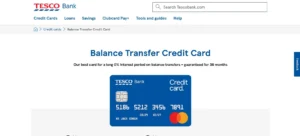
Unlike several “up to” offers, this card currently provides successful applicants with a guaranteed 36 months at 0% on qualifying balance transfers. The transfer fee is 3.45%.
Current Deal Snapshot
| Feature | Details |
| 0% Balance Transfer Period | Guaranteed 36 months |
| Balance Transfer Fee | 3.45% |
| Representative APR | 24.9% variable |
| Transfer Window | First 90 days |
| Transfer Limit | Up to 95% of available credit |
Why It Stands Out?
The guaranteed promotional duration provides greater repayment certainty than products where successful applicants can receive substantially shorter offers.
Key Features
- Transfers must be completed within 90 days to receive 0%.
- Up to 95% of the available credit limit can be transferred.
Who May Find It Suitable?
It may appeal to borrowers who prioritise certainty over securing the lowest possible transfer fee.
What To Check Before Applying?
A £5,000 transfer at 3.45% would add £172.50, so the cost should be weighed against the benefit of the guaranteed three-year period.
6. Santander Everyday Long-Term Balance Transfer Credit Card
Best For: A Fixed 34-Month Offer
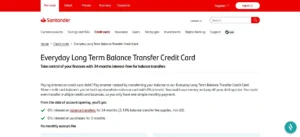
This card provides 34 months at 0% on balance transfers from account opening, with a 3.15% fee subject to a £5 minimum. It has no monthly account fee.
Current Deal Snapshot
| Feature | Details |
| 0% Balance Transfer Period | 34 months |
| Balance Transfer Fee | 3.15%, minimum £5 |
| Representative APR | 24.9% variable |
| Monthly Fee | £0 |
| Transfer Limit | £100 minimum, up to 95% of credit limit |
Why It Stands Out?
The fixed 34-month period avoids the uncertainty attached to “up to” offers while charging a lower percentage fee than some longer cards.
Key Features
- The card also provides three months at 0% on purchases.
- Transfers from other cards within the same banking group are excluded.
The current long-term card terms confirm the 34-month period, 3.15% fee and 95% transfer limit.
Who May Find It Suitable?
It may suit borrowers who want nearly three years to repay while knowing the advertised duration upfront.
What To Check Before Applying?
The transfer fee should still be compared with shorter and fee-free options where the debt could comfortably be cleared sooner.
7. Virgin Money All Round Credit Card
Best For: Balance Transfers And Purchases Together
This all-round card currently offers up to 20 months at 0% on balance transfers and purchases. Balance transfers made within 60 days carry a 2.95% fee.
Current Deal Snapshot
| Feature | Details |
| 0% Balance Transfer Period | Up to 20 months |
| Balance Transfer Fee | 2.95% |
| Representative APR | 27.9% variable |
| Transfer Window | First 60 days |
| Transfer Limit | Up to 95% of credit limit |
Why It Stands Out?
The card offers a lower transfer fee than the longest-duration options while combining balance-transfer and purchase promotions.
Key Features
- Transfers need to be made within 60 days for the promotional rate.
- Transfers from another Nationwide or Virgin Money credit card are excluded.
Who May Find It Suitable?
It may suit someone who requires less than two years to repay and also wants an introductory purchase offer.
What To Check Before Applying?
The promotional duration can vary according to circumstances, making the eligibility result important before committing to a repayment schedule.
8. Santander All In One Credit Card
Best For: Fee-Free Transfers With Extra Card Benefits
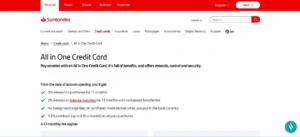
This card provides 15 months at 0% on balance transfers with no balance-transfer fee. It also offers 15 months at 0% on purchases, although a £3 monthly account fee applies.
Current Deal Snapshot
| Feature | Details |
| 0% Balance Transfer Period | 15 months |
| Balance Transfer Fee | £0 |
| Representative APR | 29.8% variable |
| Monthly Fee | £3 |
| Transfer Limit | £100 minimum, up to 95% of credit limit |
Why It Stands Out?
There is no percentage-based transfer charge, but the monthly fee means the card should not be described as completely cost-free.
Key Features
- Purchases also receive 15 months at 0%.
- Eligible purchases earn 0.5% cashback, capped at £10 per month.
Who May Find It Suitable?
It may suit borrowers able to repay within 15 months who would also use the card’s purchase or cashback features.
What To Check Before Applying?
Holding the card for 15 months would produce £45 in monthly account fees, which should be included when comparing total costs.
9. Santander Everyday No Balance Transfer Fee Credit Card
Best For: Repaying Within One Year
This card offers 12 months at 0% on balance transfers with no transfer fee during those first 12 months. There is also no monthly account fee.
Current Deal Snapshot
| Feature | Details |
| 0% Balance Transfer Period | 12 months |
| Balance Transfer Fee | £0 for first 12 months |
| Representative APR | 24.9% variable |
| Monthly Fee | £0 |
| Transfer Limit | £100 minimum, up to 95% of credit limit |
Why It Stands Out?
Someone who can repay quickly avoids paying hundreds of pounds for additional interest-free months they may not need.
Key Features
- Purchases receive three months at 0%.
- Transfers from cards within the same banking group are excluded.
Who May Find It Suitable?
It may suit smaller or more manageable balances that can realistically be cleared within one year.
What To Check Before Applying?
Any balance remaining after 12 months will become subject to the applicable standard rate, so the required monthly repayment should be calculated before transferring.
10. NatWest Balance Transfer Credit Card
Best For: Short-Term Transfers With No Fee
This option provides up to 11 months at 0% without charging a balance-transfer fee. Depending on the credit assessment, applicants can receive a promotional period between nine and 11 months.
Current Deal Snapshot
| Feature | Details |
| 0% Balance Transfer Period | 9–11 months |
| Balance Transfer Fee | £0 |
| Representative APR | 24.9% variable |
| Transfer Window | First 3 months |
| Transfer Limit | £100 minimum, up to 95% of credit limit |
Why It Stands Out?
Removing the transfer fee can make the card cheaper than a much longer promotional offer when the debt can be repaid rapidly.
Key Features
- Qualifying transfers must be made within three months of account opening.
- There is no annual fee.
Who May Find It Suitable?
It could suit borrowers with a relatively modest balance and enough monthly repayment capacity to clear it in less than a year.
What To Check Before Applying
The repayment calculation should assume nine months rather than 11 unless the longer promotional period has been confirmed.
How Should Someone Choose A 0% Balance Transfer Card?
A useful comparison starts with the repayment plan rather than the card provider. Three numbers matter most: the balance, the transfer fee and the number of interest-free months available.
Work Out How Long Repayment Will Actually Take
The borrower can estimate the required payment using:
Transferred balance + transfer fee ÷ number of 0% months = approximate monthly repayment
For example, a 3% fee costs £30 for every £1,000 transferred. Someone transferring £3,000 would therefore pay a £90 fee before considering any interest that might become payable after the promotional period.
Compare The Transfer Fee, Not Just The 0% Period
A 0% interest rate does not necessarily mean the transfer is free. Official guidance says that card providers commonly charge around 2% to 4% of the amount transferred, and the fee is normally added to the balance.
As the official balance transfer guidance explains, “most balance transfers offer a lower interest rate (often 0%) for an introductory period.
A lower fee can consequently outweigh several extra months of 0% interest when the borrower expects to repay quickly.
Check The Transfer Deadline
Promotional terms often apply only to transfers completed shortly after the new account opens. Current cards illustrate windows of 60 days or 90 days, while one current product requires transfers within its first three months and permits transfers from £100 up to 95% of the available credit limit.
Waiting too long can therefore mean losing the introductory terms even when the card itself has already been opened.
Long 0% Period Or No Transfer Fee: Which Is Better?
Neither option is universally better. The answer depends primarily on how much can be repaid each month and whether paying a fee buys genuinely useful extra repayment time.
Long-Term Versus Fee-Free Comparison
| Situation | Possible Strategy | Why It May Work |
| Balance can be cleared within about a year | No-fee or very low-fee deal | Avoids paying for unnecessary extra months |
| More repayment time is required | Mid-length low-fee deal | Balances cost against flexibility |
| Monthly repayment capacity is limited | Longer 0% deal | Spreads repayment across more months |
| Repayment timing is uncertain | Longer period with a manageable fee | Provides a larger buffer before standard interest begins |
At the long end of the current market, an offer can reach up to 38 months with a 3.49% transfer fee, while another current product guarantees 36 months with a 3.45% fee.
That extra time has value only when the borrower actually needs it.
Real-Life Example: Transferring £5,000 Of Credit-Card Debt
A simple calculation shows why comparing fees and repayment periods together provides more information than comparing 0% lengths alone.
Example Breakdown
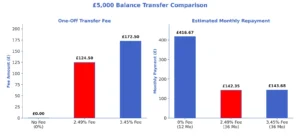
- A £5,000 transfer with no fee over 12 months would require payments of approximately £416.67 per month.
- A £5,000 transfer carrying a 3.45% fee would add £172.50, producing a £5,172.50 balance. Spread evenly across 36 months, that is approximately £143.68 per month.
- Comparing a 2.49% fee with a 3.45% fee on £5,000 produces costs of £124.50 and £172.50 respectively, a difference of £48.
The same principle applies to the £4,000 scenario often used to explain balance transfers: a 3% fee is £120, creating a £4,120 balance, which would require £206 per month over 20 months.
The cheaper option therefore depends on both the fee and how much the borrower can sustainably repay each month.
What Should Borrowers Check Before Transferring A Balance?
The advertised promotional rate is only one part of the decision. Eligibility, transfer limits and account conditions can affect whether the expected saving is actually achieved.
Check Eligibility Before Applying
An eligibility or quotation check commonly uses a soft credit search, whereas completing a full credit application can produce a hard search visible to other lenders. The official eligibility search guidance explains this distinction.
Using an eligibility checker first can therefore help a borrower assess the likelihood of acceptance before submitting a full application.
Confirm The Credit Limit
Approval does not guarantee that the new credit limit will be large enough to transfer the entire debt. Some current products permit transfers of up to 95% of the credit limit, meaning a partial transfer may be necessary.
Check Same-Bank And Banking-Group Restrictions
Cardholders generally cannot transfer debt between cards issued by the same provider, and some issuers also exclude cards within their wider banking group. Current issuer terms explicitly contain such group-level restrictions.
Make Every Minimum Payment On Time
A 0% promotion does not remove the requirement to make monthly repayments. Current card terms warn that promotional rates can depend on remaining within the credit limit and making payments on time.
Paying only the minimum may also leave substantial debt outstanding when the promotional period expires.
Avoid Unnecessary Spending On The Transfer Card
Purchases may not receive the same promotional treatment as the transferred balance. Official consumer guidance advises checking purchase rates separately, while cash transactions can carry different interest rates and charges.
Keeping the card focused on debt repayment can make the repayment plan easier to manage.
What Happens When The 0% Balance Transfer Period Ends?
Any remaining promotional balance normally moves onto the card’s applicable standard interest rate when the 0% period finishes. Current long-term products commonly show a 24.9% representative APR, while some applicants can receive different post-promotional rates depending on their circumstances.
This makes the end date an important repayment deadline rather than simply a product feature.
Conclusion
The best 0% balance transfer credit cards are not necessarily those with the longest promotional periods. The better choice is usually the card that provides enough time to clear the debt while keeping the balance-transfer fee and eventual interest exposure as low as possible.
Borrowers should calculate the required monthly repayment, compare fees in pounds, check eligibility and transfer restrictions, and plan to clear the balance before the introductory rate expires. When those factors are considered together, a 0% balance transfer can become a structured way to reduce the cost of existing credit-card debt rather than simply moving it from one account to another.
Frequently Asked Questions
What Is A 0% Balance Transfer Credit Card?
A 0% balance transfer credit card allows existing card debt to be moved to another card with an introductory interest-free period. A transfer fee may still apply even though interest is 0%.
Which UK Card Offers The Longest 0% Balance Transfer Period?
Current UK offers can provide up to 38 months at 0%, although “up to” means not every successful applicant necessarily receives the maximum period. The longest deal is not automatically the lowest-cost option.
Are Any Balance Transfer Credit Cards Completely Fee-Free?
Yes, some shorter balance-transfer promotions charge no transfer fee. Current products demonstrate that fee-free deals can provide substantially less 0% time than long-term alternatives.
Does Transferring A Credit-Card Balance Affect A Credit Score?
Moving the debt is different from applying for new credit, but a full card application can result in a hard credit search. Eligibility checks commonly use soft searches that are not visible to other lenders.
Can A Balance Be Transferred Between Cards From The Same Bank?
Providers generally do not allow a balance to be transferred between their own cards, and some restrictions extend across banking groups. The exact restriction should be checked before submitting an application.
How Much Of A Credit-Card Balance Can Be Transferred?
The amount depends on the credit limit granted and the provider’s transfer rules. Some current cards allow transfers up to 95% of the available limit rather than the full credit limit.
What Happens If The Balance Is Not Cleared Before The 0% Deal Ends?
The outstanding balance will generally begin attracting the card’s applicable standard interest rate once the introductory period expires. That rate can make carrying the remaining debt significantly more expensive.
Is A Balance Transfer Card Suitable For Someone With Bad Credit?
A weaker credit history can reduce the range of cards or promotional terms available, and acceptance is never guaranteed. Checking eligibility before a full application can help establish which options may be realistically available.

Startup mentor & Blogger | Sharing leadership tips for UK business owners
Related Articles in Finance
View All →
If I Take Home £1,600 a Month, What Is My Salary in the UK?
If an employee takes home £1,600 per month in the UK, their estimated gross salary is approximately £21,780 per year. This is equal to about £1,815 per month…

Why the Two Year Accounts Rule is Not Actually a Rule?
Ask most new business owners when they can first apply for a mortgage and the answer comes back the same way every time: two years of accounts, minimum,…

Snap-on Franchise Cost: Fees, Investment and Earnings
The Snap-on franchise cost in the UK is currently quoted at £166,597 to £168,487 for the franchise investment, with Snap-on stating that a new franchisee may need to…