
Business Plan Template Free in the UK: Start Up Loans, Forecasts, and Structure


UK Startup Blog Archive
Table of Contents
A business plan gives you a structured way to explain what your business will do, who it will serve, how it will make money, and what you need to make it work.
It can be useful whether you are starting as a sole trader, setting up a limited company, seeking investment or applying for business finance.
GOV.UK says a business plan can help you clarify your idea, identify potential problems, set goals and measure progress. It is also normally needed when seeking investment or a bank loan.
If you want a business plan template for free in the UK, you do not need to start with a blank document. You can use the structure below to build a practical plan covering your market, operations, finances, funding requirements and future objectives.
Where Can You Get a Free Business Plan Template in the UK?
Several established UK organisations provide free business planning resources.
GOV.UK currently directs entrepreneurs to free templates available through The King’s Trust and Start Up Loans.
Start Up Loans also provides separate cash flow forecasting tools to help entrepreneurs prepare the financial part of their plan.
A good template should allow you to record more than just your business idea. It should give you enough space to explain your customers, competition, pricing, sales plans, operations and financial assumptions.
You can also create your own plan using a simple structure such as:
| Business Plan Section | Information To Include |
| Executive Summary | Business concept, objectives and funding needs |
| Founder Information | Experience, skills and qualifications |
| Products Or Services | What You Will Sell And Why Customers Need It |
| Target Market | Who Your Customers Are |
| Market Research | Evidence Of Demand And Market Size |
| Competitor Analysis | Main Competitors And Your Difference |
| Sales And Marketing | How Customers Will Find And Buy From You |
| Operations | Premises, Equipment, Staff And Suppliers |
| Financial Forecast | Sales, Costs And Cash Flow |
| Funding | Amount Required And How It Will Be Used |
| Risks | Potential Problems And Contingency Plans |
| Milestones | Short-Term And Long-Term Objectives |
The structure does not need to be complicated. What matters more is whether the information is clear, realistic and supported by evidence.
Entrepreneurs who need wider help before completing the plan can also look at the different types of help available when starting a business in the UK, including mentoring, finance and business support.
What Should a UK Business Plan Template Include?
A strong business plan should allow someone who knows nothing about your company to understand how the business is expected to operate.
Start with an executive summary. Explain what the business does, the problem it solves, who its customers are and what you want to achieve.
Although this comes first in the finished document, it is often easier to write after completing the rest of the plan.
Business Wales recommends keeping an executive summary concise and says it should normally be no longer than two pages.
You should then cover:
- Business Objectives: Set Out What You Want To Achieve
- Founder Experience: Explain Relevant Skills And Previous Experience
- Products Or Services: Describe What Customers Will Buy
- Customer Profile: Identify Your Most Likely Buyers
- Market Opportunity: Show Why Demand Exists
- Competition: Identify Alternatives Available To Customers
- Pricing Strategy: Explain How Prices Have Been Calculated
- Marketing Strategy: Set Out How You Will Attract Customers
- Sales Strategy: Explain How Enquiries Will Become Sales
- Operations: Cover Premises, Equipment, Suppliers And Staffing
- Financial Forecasts: Estimate Sales, Costs And Cash Movement
- Funding Requirement: Explain How Much Money Is Needed
- Risk Planning: Identify Major Risks And Responses
- Business Milestones: Set Measurable Targets
If you are setting up formally, your planning should also take account of your tax and registration obligations.
The requirements can differ depending on whether you operate as a sole trader, partnership or limited company, so it is worth checking when a business needs to register with HMRC as part of your launch planning.
How Do You Complete a Business Plan Step by Step?
Begin by describing the business in plain English. Someone reading the first section should understand what you sell, why customers would buy it and how the business will generate revenue.
Next, define your target customer. Avoid descriptions such as “everyone” or “all UK consumers”.
A more useful customer profile considers location, age range, income, buying behaviour, business type or the specific problem the customer needs solved.
Then research your competitors. Look at:
- Products And Services: Compare What Competitors Offer
- Pricing: Check What Customers Already Pay
- Customer Reviews: Identify Frequent Complaints And Positive Features
- Marketing Channels: See How Competitors Reach Buyers
- Positioning: Understand How Each Business Differentiates Itself
Your marketing plan should follow from that research. Explain the channels you will use, how much you expect them to cost and what results you reasonably expect.
Finally, connect your written plan to your financial forecast. If the plan says you will employ two people, rent premises or spend £1,000 per month on advertising, those costs should also appear in the financial figures.
What Financial Information Should You Include?
The financial section should demonstrate whether the business has enough money to launch and whether it can remain sustainable once trading begins.
Business.gov.uk recommends preparing a cash flow forecast covering the next 12 months when preparing for funding. It should include expected business income, expenses and the running balance remaining each month.
Start-Up Costs
List everything you expect to pay before or shortly after launching.
This could include:
- Equipment
- Initial Stock
- Website Development
- Business Insurance
- Professional Fees
- Licences
- Premises Deposits
- Branding
- Initial Marketing
- Working Capital
Do not calculate only the cost of opening the business. Consider how much cash you will need while sales are still developing.
If you need outside finance, calculating these costs first will make it easier to decide how much money you need to start your business rather than simply applying for the maximum amount available.
Sales Forecast
Estimate how many products or services you expect to sell and at what price.
Your assumptions should be realistic. A new business may take time to build awareness, so avoid assuming that maximum sales will begin in the first month.
Cash Flow Forecast
A cash flow forecast tracks when money is expected to enter and leave the business.
Start Up Loans requires a 12-month cash flow forecast from applicants and advises entrepreneurs to account for quieter periods, recurring expenses, variable costs and expected promotional activity.
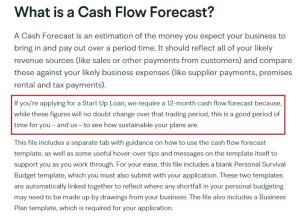
The official Start Up Loans page confirms that applicants should prepare a 12-month cash flow forecast covering expected income and business expenses.
Personal Survival Budget
If the business will become your main source of income, calculate how much you personally need each month.
Consider housing, food, utilities, transport, insurance, debt repayments and other essential household costs. This helps establish how much money you may need to draw from the business.
Break-Even Point
Your break-even point is where revenue is sufficient to cover the costs associated with operating the business.
Knowing this figure helps you estimate how many sales you need before the business begins generating a surplus.
How Do You Research Your Market and Competitors?
Market research should demonstrate that your business idea is based on evidence rather than assumption.
Start by defining the market you intend to serve. Look at the number of potential customers, current trends, typical prices and the problems customers experience.
Useful evidence can include:
- Customer Surveys
- Customer Interviews
- Test Sales
- Pre-Orders
- Website Enquiries
- Industry Reports
- Government Statistics
- Competitor Pricing
- Customer Reviews
- Pilot Projects
Testing a small version of your product or service can be particularly valuable. Business.gov.uk recommends validating a business idea and gathering feedback before committing heavily to development.
Competitor research should not simply list company names. Explain what competitors do well, where customers may be dissatisfied and why somebody might choose your business instead.
What Do UK Banks and Lenders Look for in a Business Plan?
A lender wants to see more than an attractive business idea. It needs evidence that the business is viable and that borrowing can realistically be repaid.
Important areas can include:
- Clear Funding Purpose
- Realistic Sales Forecasts
- Evidence Of Customer Demand
- Accurate Business Costs
- Relevant Founder Experience
- Sustainable Cash Flow
- Affordable Loan Repayments
- Market Understanding
- Risk Planning
For the government-backed Start Up Loan scheme, applicants currently need a business plan, a 12-month cash flow forecast and a personal budget.
Business.gov.uk also states that three months of bank statements matching the personal budget are required as part of the application process.
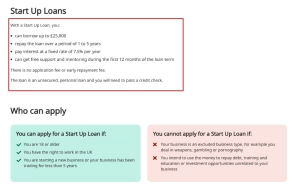
Business.gov.uk lists the business plan, 12-month cash flow forecast, personal budget and bank statements required when applying for a Start Up Loan.
If borrowing is not suitable, businesses may also investigate government grants available to new UK businesses.
Grant schemes usually have specific eligibility rules, so the plan may need to focus more strongly on the outcomes the funded project is expected to deliver.
When Do You Need a Business Plan in the UK?
There is no requirement for every person starting a business to produce a formal business plan before they can trade.
However, having one becomes particularly important when another organisation needs to judge whether your idea is credible.
You are more likely to need a detailed plan when:
- Applying For A Business Loan
- Seeking Start-Up Finance
- Approaching Investors
- Applying For Certain Grants
- Bringing In A Business Partner
- Planning Major Expansion
- Opening New Premises
- Launching A New Product
- Recruiting A Management Team
A plan can also be useful even when no outside organisation asks for it. It gives you a benchmark against which you can compare actual sales, costs and progress after launch.
How Can You Adapt a Business Plan for Loans, Grants or Investors?
The core information may remain similar, but different readers care about different outcomes.
| Reader | Main Areas To Emphasise |
| Bank Or Lender | Cash Flow, Repayments, Risks And Affordability |
| Start Up Loan Provider | Business Viability, Personal Affordability And Forecasts |
| Grant Provider | Eligibility, Project Costs And Measurable Outcomes |
| Angel Investor | Growth Potential, Market Size And Return Opportunity |
| Business Partner | Roles, Responsibilities And Long-Term Objectives |
| Internal Management | Targets, Budgets And Operational Milestones |
For a loan application, explain exactly how much you want to borrow and where the money will go.
For a grant, connect the requested funding directly to eligible project costs and expected outcomes.
For an investor, the plan may need more detail about market size, competitive advantage, growth potential and how investment could increase the value of the business.
Do not create completely unrelated versions with conflicting figures. Your assumptions, sales forecasts and operating costs should remain consistent across supporting documents.
How Long Should a UK Business Plan Be?
There is no single required page count for every UK business plan.
The appropriate length depends on the size of the business, the purpose of the document and how complicated the financial and operational model is.
A straightforward sole trader may be able to explain the business relatively concisely. A company seeking substantial external investment may need more detailed market evidence, financial projections, management information and supporting documents.
The goal should be useful detail rather than maximum length.
Business Wales recommends keeping detailed supporting information such as extensive market research and financial material in appendices where appropriate. It also advises businesses to keep plans clear, realistic and regularly updated.
Avoid repeating the same information simply to make the document longer.
What Should You Check Before Submitting Your Business Plan?
Before sending the document to a lender, investor or grant provider, review the entire plan from the reader’s perspective.
Check that:
- Sales Forecasts Have A Clear Basis
- Market Claims Are Supported By Evidence
- Competitors Are Properly Identified
- Startup Costs Are Fully Included
- Loan Repayments Appear In Cash Flow
- Personal Drawings Are Accounted For
- Funding Requirements Are Itemised
- Prices Match The Financial Forecast
- Business Risks Have Responses
- Figures Are Consistent Throughout
- Spelling And Formatting Are Clear
- Supporting Evidence Is Attached Where Necessary
Start Up Loans specifically advises applicants to make sure the figures in their written business plan match those in their financial forecast.
Your plan should ultimately answer four questions clearly: What will the business do? Who will buy from it? How will it make money? Why are the financial assumptions realistic?
FAQs
Can I Download a Business Plan Template for Free in the UK?
Yes. GOV.UK currently links to free business plan templates from organisations including The King’s Trust and Start Up Loans. You can also use a structured template of your own provided it contains the information required by the intended reader.
Is There a Free Business Plan Template in Word Format?
Free editable business plan templates are available from UK business support organisations. Check the file format before downloading if you specifically need an editable Word document rather than a PDF.
Can a Sole Trader Use a Business Plan Template?
Yes. A sole trader can use the same basic business planning structure, although sections concerning shareholders or company management may not be relevant.
Do I Need a Business Plan for a Start Up Loan?
Yes. A business plan is one of the documents required for a government-backed Start Up Loan. Applicants also need supporting financial information, including a 12-month cash flow forecast and personal budget.
What Financial Forecasts Should Be Included in a Business Plan?
At minimum, a new business should consider expected sales, operating expenses and cash flow. Funding applications may require more detailed forecasts depending on the lender or scheme.
How Often Should You Update a Business Plan?
Review it whenever there is a significant change to sales, costs, funding, staffing, products or strategy. Regular reviews also allow you to compare actual performance against your original assumptions.
What Is the Difference Between a Business Plan and a Cash Flow Forecast?
A business plan explains the overall business, market, strategy and operations. A cash flow forecast focuses specifically on when money is expected to enter and leave the business over a defined period.

Related Articles in Business
View All →
Starting a Business in London: How to Identify Market Trends and Emerging Opportunities
London remains one of the UK’s most attractive destinations for entrepreneurs, offering access to international markets, skilled professionals, diverse communities and a thriving business ecosystem. However, starting a…

Is Wetherspoons a Franchise? Costs, Ownership, Requirements and How to Apply in 2026
Yes, Wetherspoons is a franchise. J D Wetherspoon, one of Britain’s largest pub operators, now offers franchise opportunities to eligible hospitality businesses, experienced operators, investors and organisations. However,…

Amazon Delivery Franchise Cost UK: Investment, Profit, Fees and Requirements
The Amazon delivery franchise cost in the UK starts from approximately £10,000, while prospective business owners are generally expected to demonstrate at least £25,000 in liquid assets. This…