
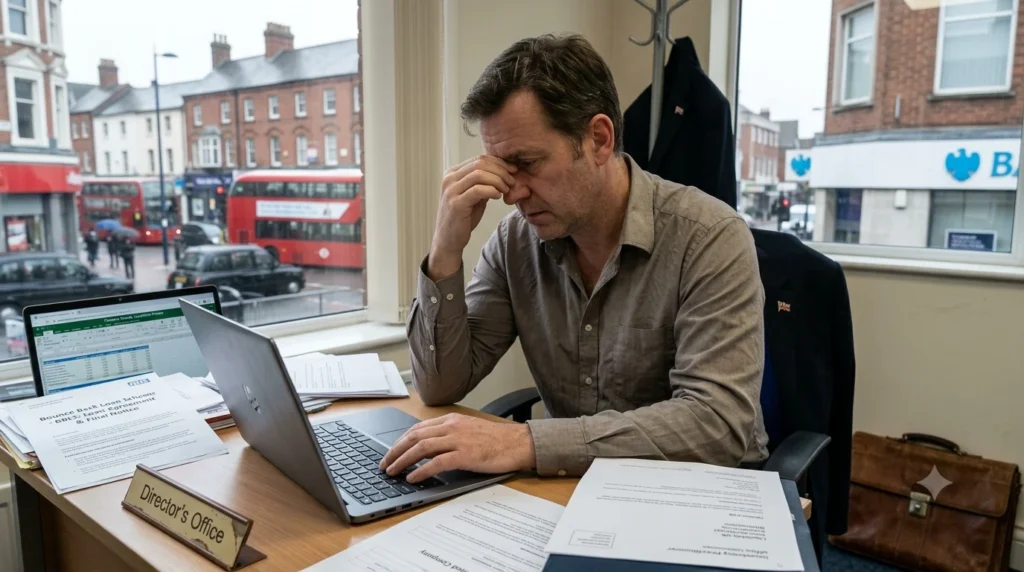
Closing a limited company with an outstanding Bounce Back Loan can lead to creditor objections, formal liquidation and an investigation into the directors’ conduct. However, the unpaid balance does not automatically become the director’s personal debt simply because the business has failed.
The correct way to close the business depends on whether the company can pay the Bounce Back Loan and its other liabilities.
A solvent company should normally repay its debts before applying for voluntary strike-off. If the company is insolvent, a formal process such as Creditors’ Voluntary Liquidation may be required.
The most important point is that the Government’s 100% guarantee protected the lender, not the borrowing company. The company remained responsible for repaying the loan.
What Happens When a Company With a Bounce Back Loan Closes?
The consequences depend on the company’s financial position and the closure method selected.
| Company’s position | Likely option | Treatment of the loan | Main consequence |
| Solvent and able to pay its debts | Repay the loan before closure | Repaid in full | Company may close through strike-off or an MVL |
| Viable but experiencing temporary difficulty | Contact the lender and consider repayment support | Loan remains payable | Closure may be avoided |
| Insolvent and unable to repay | Creditors’ Voluntary Liquidation | Lender submits a claim in the liquidation | The remaining company debt may be written off |
| Applying for strike-off with an unpaid loan | Usually unsuitable | Lender may object | Strike-off may be suspended |
| Dissolved without resolving the loan | Possible investigation or restoration | Debt is not safely erased | Directors may face scrutiny |
Directors should consider all company liabilities rather than looking at the Bounce Back Loan alone. Reviewing company debt and gearing can help determine whether the problem is temporary cash-flow pressure or wider insolvency.
What Was a Bounce Back Loan?
The Bounce Back Loan Scheme was introduced to help smaller businesses manage the disruption caused by the COVID-19 pandemic. Eligible businesses could borrow between £2,000 and £50,000, subject to the applicable turnover limit.
Loans were generally issued for six years at a fixed interest rate of 2.5%. Eligible borrowers could use Pay As You Grow options to extend the term to ten years or temporarily reduce their payments.
Although the scheme closed to new applications in March 2021, many businesses are still repaying their loans. Understanding the original Bounce Back Loan rules is important because those conditions continue to matter when a company closes.
Can a Limited Company Close With an Outstanding Bounce Back Loan?
A limited company can ultimately be closed while it has an unpaid Bounce Back Loan, but the directors must use the correct closure procedure.
A solvent company that can afford to repay the loan should normally settle it before closing. If the business has more assets than liabilities and can pay every creditor, it may be eligible for voluntary strike-off after completing the necessary winding-down work.
A Members’ Voluntary Liquidation may be considered where a solvent company has substantial assets that need to be distributed to shareholders.
If the company cannot pay the Bounce Back Loan or its other debts, it may be insolvent. In this situation, directors should obtain advice from a licensed insolvency practitioner. Creditors’ Voluntary Liquidation is one of the most common ways to close an insolvent limited company.
A carefully planned business exit strategy can help directors manage debts, employees, contracts, taxes and company assets alongside the outstanding loan.
Why Is Voluntary Strike-Off Usually Unsuitable With an Unpaid Loan?
Voluntary strike-off is designed for companies that have completed their affairs. It is not intended to help a business avoid its debts.
When directors apply to strike off a company, they must notify relevant interested parties, including creditors. A Bounce Back Loan lender is a company creditor and may object to the business being removed from the Companies House register.
If an objection is accepted, the strike-off process can be suspended. The company will remain active on the register until the objection is resolved or the proposed closure is cancelled.
A first Gazette notice also provides creditors and other interested parties with an opportunity to challenge the proposed dissolution.
Attempting to dissolve a company specifically to avoid repaying a Bounce Back Loan can be treated as misconduct. Even if the company is successfully removed from the register, dissolution does not necessarily prevent an investigation.
Does the Government Guarantee Write Off the Company’s Loan?
The Government guarantee does not write off the company’s Bounce Back Loan.
The 100% guarantee was provided to the lender. It was intended to compensate the lender for eligible losses after the required recovery process had been followed.
It was not a grant, repayment waiver or personal protection for the director. The borrowing company remained fully responsible for repaying the capital and interest.
Until the loan is repaid, restructured or included within a formal insolvency process, the company continues to owe the outstanding balance.
Does the Director Become Personally Liable for the Loan?
An unpaid Bounce Back Loan does not automatically become the director’s personal debt.
A limited company is legally separate from its directors and shareholders. This separation is one of the main features of registering a limited company.
Bounce Back Loans were normally provided without personal guarantees. Therefore, an honest business failure will not usually make the director personally responsible for the unpaid balance.
Personal liability may arise if an investigation discovers wrongdoing or a serious breach of the director’s duties. Examples include:
- Providing false turnover figures in the loan application.
- Applying when the company was not eligible.
- Obtaining more than one loan when the rules did not permit it.
- Using the money for personal purchases with no business benefit.
- Transferring funds to the director or connected people without a valid business reason.
- Hiding or undervaluing company assets before liquidation.
- Attempting to dissolve the business purely to avoid repayment.
- Continuing to incur credit when insolvent liquidation could not reasonably be avoided.
A director may also owe money through an overdrawn director’s loan account. A liquidator can pursue repayment of that balance, especially where Bounce Back Loan funds were withdrawn for personal use.
What Happens During a Creditors’ Voluntary Liquidation?
A Creditors’ Voluntary Liquidation, commonly known as a CVL, is a formal closure process for an insolvent company.
A licensed insolvency practitioner is appointed as the liquidator. The liquidator takes control of the business, identifies its assets, agrees creditor claims and distributes any available money according to insolvency law.
The Bounce Back Loan lender will usually submit a claim alongside the company’s other unsecured creditors. If there are insufficient assets to repay the loan in full, the remaining company balance may be written off when the liquidation is completed.
The director is not personally required to cover the shortfall simply because they managed the company. However, this protection may change if fraud, misfeasance, breach of duty or another basis for personal recovery is established.
The liquidator may examine:
- Whether the company qualified for the amount borrowed.
- Whether the information in the application was accurate.
- How the Bounce Back Loan money was spent.
- Whether the payments benefited the company.
- Whether some creditors were treated unfairly.
- Whether funds were paid to directors or connected parties.
- Whether company assets were transferred or hidden.
- When the company became insolvent and how the directors responded.
Bank statements, invoices, payroll records, contracts and management accounts can help show that the money was used for legitimate business purposes.
Can Directors Be Investigated After the Company Is Dissolved?
Directors can still be investigated after their company has been dissolved.
The Insolvency Service has powers to investigate suspected misconduct involving live, insolvent and dissolved companies. Dissolution is therefore not a guaranteed barrier against investigation or recovery action.
A company may also be restored to the register in appropriate circumstances. Restoration may allow a creditor to continue recovery proceedings or enable the business to be placed into formal liquidation.
An investigation does not automatically mean that the director will be penalised. Genuine commercial failure is different from deliberate misuse. The outcome will depend on the original application, how the money was spent and the quality of the company’s records.
What Penalties Could a Director Face?
Where serious misconduct is established, the director could face financial and legal consequences.
| Possible consequence | What it could mean |
| Personal repayment or compensation | The director may have to contribute towards creditor losses |
| Director disqualification | The individual may be prevented from managing a company |
| Civil recovery proceedings | Money or property may be recovered from the director |
| Criminal investigation | Fraud or dishonest conduct may lead to prosecution |
| Court-ordered liquidation | The company may be placed into a formal insolvency process |
| Confiscation proceedings | Assets obtained through criminal conduct may be recovered |
Director disqualification can last from 2 to 15 years, depending on the seriousness of the misconduct. Severe cases involving deliberate fraud may also result in fines or imprisonment.
What Happens to Company Assets After Strike-Off?
Once a company has been dissolved, it no longer exists as a legal entity. Money remaining in its bank account and other company-owned assets may pass to the Crown as bona vacantia.
The company’s bank account may be frozen, meaning former directors cannot simply withdraw the remaining money. Restoring the company may be necessary to recover assets or deal with unresolved claims.
Before applying for closure, directors should identify all company assets, including:
- Cash held in business accounts.
- Equipment, machinery and vehicles.
- Intellectual property and domain names.
- Tax refunds.
- Outstanding customer invoices.
- Deposits and investments.
- Property owned by the company.
Company assets must not be distributed informally to directors or shareholders while creditors remain unpaid.
Will Closing the Company Affect the Director’s Personal Credit?
A company default or liquidation does not normally appear as a personal credit default simply because an individual was its director.
The company and director are legally separate. However, the director’s personal credit could be affected if they receive a County Court judgment, become personally liable for a debt or enter a personal insolvency procedure.
Lenders may also consider a person’s history with failed companies when assessing future business-finance applications. This can happen even if the individual’s personal credit report does not contain a default connected to the Bounce Back Loan.
Can the Director Start Another Company?
An honest company failure does not normally prevent someone from starting or managing another business.
However, a disqualified director cannot manage, form or control a company without obtaining court permission.
There may also be restrictions on using the same or a similar company name following insolvent liquidation. Directors should check the rules before launching another business under a name connected to the failed company.
A new company must not be used to remove assets from the old business and place them beyond the reach of creditors. Any sale of assets to a connected company should be properly valued, documented and handled with professional advice.
What Alternatives Should Be Considered Before Closure?
Company closure is not always the only option. If the underlying business remains viable, the director should contact the original lender before missing further repayments.
Depending on eligibility and previous use, Pay As You Grow may allow the company to:
- Extend the loan term from six to ten years.
- Make interest-only payments for six months.
- Take a six-month repayment holiday.
These options may increase the total interest paid. The company should therefore assess whether the reduced payments will create a sustainable solution or merely delay insolvency.
Other possibilities may include a Company Voluntary Arrangement, refinancing, cost reductions, asset sales, new investment or an agreed repayment plan.
What Should Directors Do Before Closing the Company?
Directors should take several practical steps before deciding how to close the business.
- Calculate the financial position: List all company assets, debts, taxes, employee claims and overdue payments.
- Check the loan balance: Confirm the outstanding capital, interest, arrears and any formal demands with the lender.
- Review the original application: Keep evidence of the company’s eligibility, turnover and information submitted.
- Trace how the money was used: Match material payments to invoices, bank statements and other business records.
- Avoid increasing creditor losses: Stop taking unnecessary credit or transferring assets if the company may be insolvent.
- Contact the lender: Discuss repayment support or restructuring options before assuming that closure is necessary.
- Obtain insolvency advice: Speak to a licensed insolvency practitioner if the company cannot pay its debts.
- Choose the correct closure route: Use strike-off only when appropriate and formal liquidation where insolvency requires it.
Taking advice early gives directors more options. Waiting until the company has no money, incomplete records and several legal demands can make the situation more difficult.
Which Mistakes Should Directors Avoid?
| Mistake | Why it creates a problem |
| Filing for strike-off without notifying the lender | The lender may object and the failure to notify could be investigated |
| Assuming the Government guarantee clears the debt | The guarantee protects the lender, not the company |
| Paying the director before creditors | The payment could be challenged and recovered |
| Moving assets cheaply to a new company | The transaction may be treated as an undervalue |
| Failing to preserve company records | Missing records make proper loan use harder to prove |
| Ignoring official correspondence | Important deadlines and repayment options may be missed |
| Treating the loan as personal spending money | Personal use can result in recovery or disqualification |
Conclusion
The consequences of closing a limited company with a Bounce Back Loan depend on the company’s financial position and the conduct of its directors.
A solvent company should repay the loan and complete an orderly closure. An insolvent company may need to enter Creditors’ Voluntary Liquidation, allowing the lender to submit a claim through the formal process.
The unpaid balance does not automatically become the director’s personal debt. However, limited liability does not protect fraud, dishonest applications or misuse of company money.
Directors should preserve their records, contact the lender, avoid inappropriate transactions and obtain professional advice before applying for strike-off. Choosing the correct closure process is the safest way to protect creditors and reduce the risk of personal consequences.
Frequently Asked Questions
Can a Company Be Dissolved With an Unpaid Bounce Back Loan?
A strike-off application can be submitted, but voluntary strike-off is normally unsuitable while the loan remains unpaid. The lender may object and stop the dissolution. If the company is insolvent, formal liquidation may be more appropriate.
Is a Bounce Back Loan Written Off During Liquidation?
The lender can submit a claim in the liquidation. If the company’s assets cannot cover the entire balance, the remaining company debt may be written off when liquidation is completed. The director may still face personal recovery if misuse or wrongdoing is established.
Can the Loan Be Transferred to Another Company?
A Bounce Back Loan belongs to the company that borrowed it and cannot simply be transferred to a new business. Moving the loan money or related assets to another company without proper authority could be treated as misuse.
Can the Bank Chase the Director Personally?
The lender cannot normally pursue the director merely because the company cannot repay the loan. Personal recovery may become possible where there is fraud, misfeasance, an overdrawn director’s loan account, a personal guarantee relating to another debt or a court order.
What if the Company Has Already Been Dissolved?
The former director should preserve all available records and obtain legal or insolvency advice. Dissolved companies can still be investigated and may be restored to the register so that creditor or enforcement action can continue.
Can HMRC Debt and a Bounce Back Loan Be Included in a CVL?
A CVL can deal with the company’s Bounce Back Loan, tax liabilities, supplier debts and other eligible claims together. The liquidator distributes available assets according to the statutory order of priority.
Does an Honest Business Failure Cause Director Disqualification?
Business failure alone does not normally result in disqualification. The main concern is unfit conduct, such as dishonesty, false applications, misuse of company money, serious record-keeping failures or deliberate attempts to avoid creditors.

Blogger & Content creator | An insightful writer sharing practical advice for UK entrepreneurs