
Health and Safety in the Workplace: Employer’s Responsibilities


UK Startup Blog Archive
Table of Contents
Employers are legally responsible for protecting the health, safety and welfare of employees while they are at work.
This includes carrying out risk assessments, controlling workplace hazards, providing suitable training and equipment, maintaining safe premises, consulting workers and recording qualifying incidents.
Employers must also consider contractors, visitors, customers and members of the public who could be affected by their activities.
These responsibilities apply to businesses of every size, although organisations with five or more employees have additional record-keeping requirements.
What Are an Employer’s Main Health and Safety Responsibilities?
Under UK health and safety law, an employer must take reasonably practicable steps to prevent employees and other people from being harmed by business activities.
The principal responsibilities include:
- Identifying workplace hazards.
- Completing suitable and sufficient risk assessments.
- Introducing measures to eliminate or control risks.
- Preparing a health and safety policy.
- Appointing a competent person.
- Providing appropriate information, instruction and training.
- Supplying suitable personal protective equipment where necessary.
- Maintaining safe equipment and working environments.
- Providing adequate first-aid arrangements.
- Consulting employees about workplace safety.
- Recording accidents and reporting qualifying incidents.
- Reviewing safety arrangements when circumstances change.
These duties should be integrated into everyday management rather than treated as a one-off administrative exercise.
Which Health and Safety Laws Apply to Employers?
The Health and Safety at Work etc. Act 1974 provides the main legal framework for workplace safety in Great Britain. It requires employers to protect the health, safety and welfare of employees so far as is reasonably practicable.
Several supporting regulations cover particular workplace responsibilities.
| Legislation | Main employer responsibility |
| Health and Safety at Work etc. Act 1974 | General responsibility to protect employees and other affected people |
| Management of Health and Safety at Work Regulations 1999 | Risk assessments, competent assistance and emergency planning |
| Workplace (Health, Safety and Welfare) Regulations 1992 | Safe premises, ventilation, lighting and welfare facilities |
| Provision and Use of Work Equipment Regulations 1998 | Safe selection, maintenance and operation of equipment |
| Personal Protective Equipment at Work Regulations 1992 | Suitable PPE where risks cannot be adequately controlled |
| Control of Substances Hazardous to Health Regulations 2002 | Assessment and control of hazardous substances |
| Reporting of Injuries, Diseases and Dangerous Occurrences Regulations 2013 | Reporting and recording certain workplace incidents |
| Health and Safety (First-Aid) Regulations 1981 | Appropriate first-aid equipment, facilities and personnel |
Additional rules may apply in industries such as construction, healthcare, manufacturing, transport, agriculture and food production. Northern Ireland has a separate but broadly similar workplace health and safety system.
How Should Employers Carry Out a Workplace Risk Assessment?
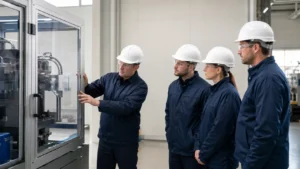
Every employer must carry out a suitable and sufficient assessment of workplace risks. This requirement applies even if the business has only one employee.
An effective risk assessment should follow five practical stages:
- Identify anything that could cause injury or ill health.
- Decide who could be harmed and how the harm might occur.
- Evaluate the level of risk and select suitable controls.
- Record significant findings where required.
- Review the assessment and update it when necessary.
Common hazards include unsafe machinery, trailing cables, manual handling, excessive noise, hazardous substances, workplace stress, fire risks, repetitive movements and poorly designed workstations.
Employers should prioritise eliminating a hazard completely. If this is not reasonably practicable, they should reduce exposure through safer equipment, restricted access, revised working methods, training and protective equipment.
A separate assessment may be needed when a workplace contains flammable materials or another potential ignition source.
When Must a Risk Assessment Be Written Down?
Businesses with five or more employees must record the significant findings of their risk assessments.
The written record should explain:
- Which hazards were identified.
- Who may be affected.
- Which control measures are already in place.
- What additional action is required.
- Who is responsible for completing the action.
- When the work should be completed.
- When the assessment will be reviewed.
Employers with fewer than five employees must still assess risks, even though they are not generally required to record the findings. Keeping a written record is nevertheless useful because it provides evidence of the decisions made and makes future reviews easier.
Does Every Employer Need a Health and Safety Policy?
Every employer should have arrangements for managing health and safety. If the business employs five or more people, its health and safety policy must be written down.
A suitable policy normally contains three parts.
Statement of intent
This explains the organisation’s commitment to preventing workplace injuries and work-related ill health.
Responsibilities
This identifies the owners, directors, managers or employees responsible for particular safety duties.
Arrangements
This explains how risks will be managed in practice, including training, first aid, fire procedures, equipment inspections and accident reporting.
The policy should be communicated to employees and reviewed regularly. A review may also be necessary after an accident, the introduction of new equipment, a move to different premises or a significant change in staffing.
Who Is the Competent Person for Health and Safety?
An employer must appoint one or more competent people to help the business comply with its health and safety duties. A competent person requires an appropriate combination of knowledge, skills, experience and training.
The competent person could be:
- The business owner.
- A suitably trained employee.
- A health and safety manager.
- An external consultant.
Small employers do not automatically need to hire a full-time health and safety professional. However, they should obtain specialist assistance when the risks are complex or when they do not have sufficient knowledge internally.
Appointing another person does not remove the employer’s overall legal responsibility.
What Training Must an Employer Provide?
Employees must receive enough information, instruction, training and supervision to perform their work safely. Training should be relevant to the employee’s role and delivered in a format they can understand.
It may cover:
- Emergency and evacuation procedures.
- Correct use of machinery and work equipment.
- Manual handling techniques.
- Safe use and storage of hazardous substances.
- Personal protective equipment.
- Reporting hazards, accidents and near misses.
- Working at height.
- Fire prevention.
- Display screen and workstation safety.
- Lone-working procedures.
Health and safety information should form part of the new employee induction process. Further training may be required when employees change roles, new equipment is introduced or working procedures are updated.
Training provided to meet an employer’s health and safety duties should be delivered during working hours and without charging the employee.
Must Employers Provide Personal Protective Equipment?
Employers must first try to eliminate hazards or control them through safer systems of work. Where a remaining risk requires personal protective equipment, suitable PPE should be provided without charge.
Depending on the work, PPE may include:
- Safety helmets.
- Protective footwear.
- Gloves.
- Eye protection.
- Respiratory protection.
- Hearing protection.
- High-visibility clothing.
- Safety harnesses.
The employer must ensure that the equipment is appropriate for the risk, fits the worker properly and is maintained in good condition. Employees must also receive instructions on how to use, store and inspect it.
Providing PPE alone is not sufficient when the hazard could reasonably be removed or controlled through safer equipment or working methods.
How Must Employers Maintain a Safe Workplace?
Workplaces must be maintained so that employees can move around and perform their duties safely. The exact arrangements will depend on the nature of the business.
Employers should consider:
- Cleanliness and waste removal.
- Suitable lighting.
- Reasonable workplace temperatures.
- Effective ventilation.
- Safe floors, stairs and access routes.
- Adequate space for employees.
- Properly maintained doors and windows.
- Safe traffic routes for vehicles and pedestrians.
- Accessible toilets and washing facilities.
- Drinking water and rest areas.
Work equipment must also be suitable for its intended purpose, properly maintained and used only by trained or authorised people where necessary.
What First-Aid Arrangements Must an Employer Make?
Every workplace must have appropriate first-aid arrangements. Employers should complete a first-aid needs assessment based on the number of employees, workplace hazards, work patterns and distance from emergency medical services.
As a minimum, a workplace will normally need:
- A suitably stocked first-aid kit.
- An appointed person to manage first-aid arrangements.
- Clear information explaining how employees can get help.
Higher-risk workplaces may need trained first-aiders, additional equipment or dedicated first-aid facilities. Arrangements should also cover employees working remotely, travelling for work or operating alone.
What Are an Employer’s Fire Safety Responsibilities?
Employers must assess fire risks and take reasonable steps to protect employees and other people on the premises. Fire safety arrangements should cover prevention, detection, evacuation and emergency response.
Responsibilities may include:
- Identifying combustible materials and ignition sources.
- Providing suitable fire alarms and warning systems.
- Keeping emergency exits clear.
- Installing appropriate firefighting equipment.
- Preparing an evacuation procedure.
- Appointing and training fire wardens where necessary.
- Supporting employees who need help evacuating.
- Testing alarms and conducting drills.
- Maintaining records of checks and training.
Fire risk assessments should be reviewed whenever there are significant changes to the building, occupancy, layout or business activities.
Must Employers Protect Employees’ Mental Health?
An employer’s responsibilities extend to both physical and mental health. Workplace stress should be assessed and managed in the same structured way as other health risks.
Potential causes can include:
- Unmanageable workloads.
- Excessive working hours.
- Bullying or harassment.
- Poor communication.
- A lack of support.
- Unclear responsibilities.
- Organisational change.
- Limited control over how work is completed.
Employers should encourage early reporting, train managers to respond appropriately and consider reasonable adjustments where an employee has a health condition.
Supporting workplace wellbeing can also improve retention, engagement and productivity. Appropriate support may form part of the organisation’s wider employee benefits package.
Do Health and Safety Duties Apply to Remote Workers?
Employers remain responsible for employees’ health and safety when they work from home or another remote location. The employer does not need to control every aspect of the employee’s home, but should assess risks that arise from the work being performed.
Remote-working assessments may consider:
- Display screen equipment.
- Workstation posture.
- Electrical equipment.
- Work-related stress.
- Isolation and communication.
- Working hours and breaks.
- First-aid arrangements.
- Reporting accidents or equipment problems.
Employers should provide suitable equipment, guidance and a clear process for raising concerns. Lone workers may require scheduled contact, emergency procedures or personal communication devices.
How Should Employers Consult Their Employees?
Employers must consult employees about matters affecting their health and safety. Consultation can take place directly or through elected representatives or recognised trade union safety representatives.
Employees should be consulted about:
- Workplace risks and control measures.
- New equipment or working procedures.
- Health and safety training.
- The appointment of competent assistance.
- Changes that may substantially affect their safety.
- Information provided about hazards.
Employees often understand day-to-day risks better than senior management. Proper consultation can therefore identify unsafe shortcuts, equipment problems and overlooked hazards before an accident occurs.
Which Workplace Accidents Must Be Recorded or Reported?
Employers should maintain an accident book or another appropriate recording system. Records help identify patterns, support investigations and demonstrate how the business responded.
Certain work-related incidents must also be reported under RIDDOR.
These can include:
- Work-related deaths.
- Specified injuries to workers.
- Certain occupational diseases.
- Dangerous occurrences.
- Qualifying injuries resulting in extended absence.
- Certain injuries involving members of the public.
Not every accident is reportable under RIDDOR. Employers should check whether the nature of the incident meets the relevant reporting criteria and submit any required report within the applicable time limit.
Near misses should also be recorded internally where they reveal a serious weakness, even if they are not legally reportable.
Is Employers’ Liability Insurance Compulsory?
Most businesses must obtain employers’ liability insurance as soon as they employ staff. The policy must usually provide cover of at least £5 million and come from an authorised insurer.
The insurance may help cover compensation if an employee becomes ill or is injured because of their work. The certificate should be made accessible to employees, including through a workplace intranet where appropriate.
Employers’ liability insurance should not be confused with public liability insurance for a small business, which primarily concerns claims from customers, visitors and other members of the public.
Business owners can also review the wider forms of protection included in small business insurance. Insurance does not replace the employer’s responsibility to prevent harm.
Do Sole Traders Have the Same Responsibilities?
A sole trader who employs staff has broadly the same workplace health and safety responsibilities as other employers. The legal structure of the business does not remove the duty to assess risks, provide training and maintain safe working conditions.
Sole traders preparing to expand should consider health and safety alongside payroll, employment documentation and insurance. Understanding whether sole traders can have employees can help owners prepare for these wider obligations.
What Should Employers Do After a Workplace Accident?
The immediate priority is to protect the injured person and prevent further harm.
Employers should then follow a structured response:
- Provide first aid and contact emergency services if required.
- Make the area safe without unnecessarily disturbing important evidence.
- Record the accident and obtain accurate witness details.
- Determine whether a RIDDOR report is required.
- Investigate the direct and underlying causes.
- Introduce corrective action.
- Update the relevant risk assessment.
- Communicate necessary changes to employees.
- Monitor whether the new controls are effective.
An investigation should focus on prevention rather than automatically blaming an individual. Unsafe procedures, insufficient training, poor maintenance or weak supervision may have contributed to the event.
What Happens if an Employer Breaches Health and Safety Law?

Failure to meet workplace health and safety responsibilities can lead to:
- Improvement or prohibition notices.
- Criminal prosecution.
- Substantial financial penalties.
- Civil compensation claims.
- Higher insurance costs.
- Operational disruption.
- Contract losses.
- Reputational damage.
- Personal liability for directors in certain circumstances.
Serious failures can also result in imprisonment. Employers facing a complex investigation or dispute may need assistance from an appropriate business solicitor.
What Is a Practical Health and Safety Checklist for Employers?
Employers can use the following checklist to review their current arrangements:
- Complete and document appropriate risk assessments.
- Prepare a written policy where five or more people are employed.
- Appoint a competent person.
- Assign clear safety responsibilities.
- Provide role-specific training and supervision.
- Maintain equipment, premises and welfare facilities.
- Supply suitable PPE where required.
- Assess first-aid and fire-safety needs.
- Consult employees and safety representatives.
- Consider remote, lone and vulnerable workers.
- Record accidents and investigate near misses.
- Report qualifying incidents.
- Maintain suitable employers’ liability insurance.
- Review arrangements after changes or incidents.
Conclusion
Health and safety in the workplace is an ongoing employer responsibility. A compliant business must identify risks, introduce effective controls, train employees, maintain safe equipment and consult its workforce.
It must also respond properly to accidents, protect remote workers and review its arrangements as the organisation develops.
The most effective approach is to make safety part of everyday business decisions. Clear responsibilities, accurate records and regular communication can protect employees while reducing legal, operational and financial risks for the employer.
Frequently Asked Questions
Who is ultimately responsible for health and safety in the workplace?
The employer has the primary legal responsibility for workplace health and safety. Duties may be delegated to managers or competent advisers, but the employer remains accountable for ensuring suitable arrangements are in place.
Does a small business need a risk assessment?
Yes. Every employer must assess workplace risks regardless of business size. Businesses with five or more employees must record the significant findings.
When is a written health and safety policy required?
A written policy is legally required when a business employs five or more people. Smaller employers still need health and safety arrangements and may benefit from documenting them.
Can an employee refuse to follow a safety procedure?
Employees must take reasonable care of themselves and others and cooperate with their employer’s safety arrangements.
Deliberately ignoring reasonable procedures may become a disciplinary matter, although employers should first confirm that instructions and training were adequate.
Who pays for workplace safety training and PPE?
Employers should not charge workers for training or personal protective equipment needed to comply with workplace health and safety duties.
How often should a workplace risk assessment be reviewed?
There is no single review period for every business. An assessment should be reviewed regularly and whenever there is reason to believe it is no longer valid, such as after an accident, staffing change, new equipment or altered working process.

Startup mentor & Blogger | Sharing leadership tips for UK business owners
Related Articles in Startup
View All →
Newscivil Com: Can This Digital News Platform Help UK Startups Spot Emerging Trends?
For startup founders, staying informed is no longer simply about reading the business pages each morning. Artificial intelligence, changing consumer habits, technology developments, government decisions and wider social…

Meet the Startup Turning Screen Time Into a New Way to Make Money
Britain does not exactly have a shortage of side hustles. You can deliver takeaways, sell clothes online, start freelancing, walk dogs, tutor in the evenings or attempt to…

8 Best Coworking Spaces for Bootstrapped London Startups to Launch and Scale in 2026
Bootstrapped founders don’t have the luxury of a fitted-out HQ from day one. What you need is a London coworking space that flexes with you: a hot desk…