
How to Sell on Amazon in the UK: Step-by-Step Setup, FBA Rules, and Fees


UK Startup Blog Archive
Table of Contents
Selling on Amazon can give a UK business access to a huge existing customer base without having to build an ecommerce audience entirely from scratch.
However, getting an Amazon seller account is the easy part. Choosing a product with enough margin, understanding Amazon’s fees, meeting tax and product rules and maintaining a healthy seller account are where the real work begins.
Amazon selling has also changed considerably since Marketplace first arrived in the UK.
Competition is stronger, advertising is more important, fulfilment options have expanded and online sellers now operate within tighter tax-reporting and product-safety frameworks.
If you are considering Amazon as a side business or want to develop it into a larger ecommerce company, here is what selling on Amazon UK actually involves in 2026.
How Has Selling On Amazon UK Changed From 2002 To 2026?
Amazon.co.uk itself launched in October 1998, initially focusing heavily on books.
Amazon Marketplace followed on 20 March 2002, allowing individuals and businesses to sell new, used and collectable goods alongside Amazon’s own products.
Amazon then launched Fulfilment by Amazon in 2006, allowing third-party sellers to store inventory within Amazon’s fulfilment network.
Amazon Prime arrived in the UK in 2007, making fast delivery an increasingly important part of competing on the marketplace.
| Year | What Changed |
| 1998 | Amazon.co.uk launched in the UK |
| 2002 | Amazon Marketplace launched for third-party sellers |
| 2006 | Fulfilment by Amazon was introduced |
| 2007 | Amazon Prime launched in the UK |
| 2024 | New digital-platform reporting rules began applying in the UK |
| 2025 | Product Regulation and Metrology Act 2025 came into force |
| 2026 | Amazon reduced several European referral and FBA fees and expanded Low-Price FBA eligibility |
The difference in 2026 is that simply finding a generic product and putting it on Amazon is unlikely to be enough.
Sellers now compete on price, delivery speed, reviews, advertising visibility, listing quality, stock availability and seller performance.
Amazon has also reduced certain costs during 2026. Its European changes included lower FBA parcel fees, reductions to referral fees in selected categories and wider Low-Price FBA rates for most eligible products priced at or below £20.
How Hard Is It To Sell On Amazon UK In 2026?
Technically, starting is relatively straightforward. Building a consistently profitable Amazon business is much harder.
The difficulty depends heavily on what you sell. A seller entering a crowded category with an undifferentiated product may face dozens or hundreds of established listings, strong review histories and businesses willing to spend heavily on advertising.
There are four different challenges to consider:
- Getting Started: Opening an account and creating listings is relatively accessible once Amazon has verified your details
- Finding The Right Product: You need enough demand without entering a market where competition destroys your margin
- Making A Profit: Referral fees, fulfilment, advertising, returns and sourcing costs all reduce what you keep
- Staying Compliant: Tax, product safety, packaging and Amazon’s own marketplace policies need ongoing attention
This means Amazon is easy to enter but considerably harder to master.
Is Selling On Amazon UK Still Worth It?
Amazon can still be worthwhile in 2026, but it works best when treated as a business rather than an easy passive-income opportunity.
Its biggest advantage is customer access. Instead of first convincing shoppers to visit an unknown ecommerce website, you can place a product in a marketplace that customers already use and trust.
The downside is that you give up some control. Amazon sets marketplace policies, charges fees and can restrict listings or selling privileges where standards are not met.
Selling is therefore more attractive when you have a product with healthy margins, dependable suppliers and a clear reason why customers should choose your offer.
Before committing significant money to stock, it is worth creating basic sales, cost and cash-flow forecasts.
A simple business plan can help establish how many units you would need to sell before the Amazon operation becomes commercially worthwhile.
How Do You Choose A Profitable Product To Sell On Amazon UK?
Product selection is arguably more important than creating the seller account itself.
Start with demand, but do not assume that the product with the highest search volume is automatically the best opportunity.
High-demand categories frequently attract stronger competition and higher advertising costs.
Look at factors such as:
- Demand: Check whether customers consistently search for and purchase the type of product
- Competition: Examine the number, quality and review strength of existing listings
- Margin: Calculate product cost, Amazon fees, fulfilment, advertising, VAT where applicable and expected returns
- Practicality: Smaller, lighter and less fragile products can often be simpler and cheaper to store and fulfil
Also consider seasonality. A product performing strongly during Christmas, summer holidays or another short period may look more attractive than its year-round sales actually suggest.
Do the calculation before ordering large quantities. A £30 selling price means very little if £25 disappears through sourcing, shipping, advertising, marketplace fees and refunds.
What Do You Need And How Do You Set Up An Amazon UK Seller Account?
Before registering, decide whether you are experimenting with occasional sales or building a genuine trading business.
If Amazon forms part of a wider commercial venture, many of the same decisions involved in starting a business in the UK apply, including choosing a legal structure, registering correctly, keeping financial records and understanding your tax responsibilities.
Amazon offers two main selling plans.
Individual Selling Plan
The Individual plan costs £0.75 excluding VAT for each item sold, plus other applicable selling fees. Amazon suggests it may suit sellers expecting fewer than 35 sales per month or those still deciding what they want to sell.
Professional Selling Plan
The Professional plan currently costs £25 excluding VAT per month, plus applicable selling fees. It provides access to additional tools including advertising and advanced reports and may be required for certain selling categories.
During registration, Amazon may request information such as your identity details, business information, payment card, bank details and tax information.
Keep the details consistent across your documents. Differences between your registered name, bank account, company records and identification can make verification more complicated.
How Much Does It Cost To Sell On Amazon UK?
The monthly or per-item plan charge is only one part of Amazon’s costs.
Most sellers also need to account for referral fees. Amazon states that most referral fees currently fall between 8% and 15%, although the exact percentage depends on the product category.
Other possible costs include FBA fulfilment charges, storage, aged inventory costs, advertising, refunds, returns and product preparation.
Amazon made several fee changes for 2026. These include an average reduction of £0.26 in FBA parcel fulfilment fees across the UK and several major European stores, plus reduced referral fees in selected low-price categories.
Low-Price FBA rates have also been extended across most categories to products priced at or below £20.
A seller should therefore calculate the total cost per unit, rather than looking only at Amazon’s monthly subscription.
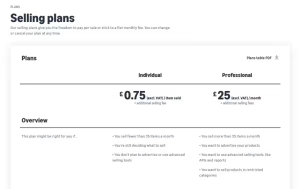
Amazon’s official pricing page shows the Individual and Professional plan charges, referral fees and current 2026 FBA fee changes.
What Tax And HMRC Rules Apply To Amazon Sellers In The UK?
Selling on Amazon does not create a special Amazon tax. Normal UK tax rules apply according to what you are doing and how the business is structured.
HMRC says you are probably trading when you buy goods intending to resell them for a profit or make products specifically to sell.
Where total income from trading activities is more than the £1,000 trading allowance during the tax year, you may need to tell HMRC.
A sole trader may therefore have Income Tax and National Insurance obligations, while a limited company normally deals with Corporation Tax on company profits.
The VAT position should also be monitored carefully. The compulsory UK VAT registration threshold remains £90,000 of taxable turnover.
Registration can also be required in other circumstances, particularly for businesses established outside the UK.
Amazon sellers should keep records of sales, refunds, Amazon fees, advertising, inventory purchases, shipping and other business expenses.
Understanding how small business tax returns work can make it easier to organise these records before filing deadlines arrive.
There is also an important platform-reporting rule. Since 1 January 2024, digital platforms may be required to collect seller information and report it to HMRC.
This reporting does not automatically mean that the seller owes tax. It gives HMRC additional information that can be compared with the seller’s tax position.
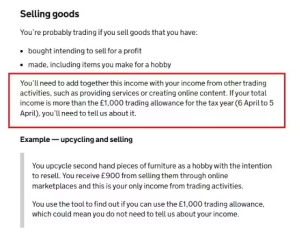
HMRC’s guidance confirms when online selling may count as trading and explains the £1,000 trading allowance.
What New Laws, Product Rules And Restrictions Should Amazon Sellers Know About In 2026?
Product compliance has become increasingly important for online sellers.
The Product Regulation and Metrology Act 2025 came into force on 21 July 2025.
Among other things, it gives the government powers to make regulations concerning products marketed through online marketplaces and is intended to strengthen the UK’s ability to respond to unsafe products and changing technologies.
In March 2026, the government also announced consultation on further product-safety reforms covering online sales.
Sellers should distinguish between the Act and future measures being consulted on, because not every proposed reform is already an enforceable requirement.
Packaging is another area to watch. Under Extended Producer Responsibility for packaging, businesses need to check whether their activities make them a packaging producer.
Relevant activities can include importing packaged goods, packing products, supplying own-brand packaged goods or selling filled packaging to an end user.
Amazon also applies its own restrictions in addition to UK law. Some categories are open to sellers, while others require approval or additional documentation.
Products may also be prohibited because of legal restrictions or Amazon policy.
Always check restrictions before purchasing inventory, particularly when selling food, supplements, cosmetics, electronics, children’s products or other regulated goods.
How Do You Create An Amazon Product Listing That Sells?
A listing needs to do two jobs. It must help Amazon understand what the product is, and it must convince a customer that the product is worth buying.
If an identical product already exists in Amazon’s catalogue, you may normally add your offer to the existing product page. If you are introducing a new product, you may need to create a new listing.
Focus on four elements:
- Product Title: Clearly identify the product and its important characteristics without keyword stuffing
- Product Images: Use sharp images that accurately show the item, packaging, scale and useful details
- Bullet Points: Explain the strongest features and customer benefits quickly
- Product Description: Provide the additional information a customer needs before purchasing
Keywords still matter, but writing only for search algorithms can damage conversion. A listing that ranks but does not persuade customers to buy will struggle to perform commercially.
Pricing also affects competitiveness. Compare the complete customer offer rather than automatically becoming the cheapest seller.
Delivery speed, seller reputation, product reviews and availability can all influence buying decisions.
Should You Use Amazon FBA Or Fulfil Orders Yourself?
With Fulfilment by Amazon, you send inventory to Amazon and the company handles storage, picking, packing, delivery and much of the customer-service process.
With Fulfilment by Merchant, you hold the inventory and dispatch customer orders yourself.
| Factor | FBA | FBM |
| Inventory Storage | Amazon | Seller |
| Packing And Dispatch | Amazon | Seller |
| Fulfilment Fees | Amazon FBA fees | Your own shipping costs |
| Operational Control | Lower | Higher |
| Scaling Orders | Usually easier | Depends on your operation |
| Storage Requirement | Amazon network | Your own storage |
FBA can make scaling easier, but it does not automatically make every product profitable. Large, slow-moving or low-margin products can accumulate fulfilment and storage costs.
FBM gives you greater control and may suit sellers with their own warehouse, low order volumes or products that are expensive to place into FBA.
If you fulfil orders yourself, efficient packaging, carrier selection and returns processes become particularly important. Improving your wider ecommerce shipping process can help protect both delivery performance and margins.
How Much Profit Can You Make Selling On Amazon UK?
There is no standard Amazon seller profit margin. Two sellers charging the same price can have completely different profits because their sourcing, advertising and fulfilment costs differ.
Consider an illustrative £25 product:
| Item | Example Amount |
| Selling Price | £25.00 |
| Product Cost | £7.00 |
| Referral Fee At 15% | £3.75 |
| Illustrative Fulfilment Cost | £3.50 |
| Advertising Cost | £2.00 |
| Other Costs | £1.00 |
| Illustrative Remaining Amount | £7.75 |
This is only an example and does not represent the actual fee for a particular product. It also does not account for every possible tax or VAT situation.
The important calculation is contribution margin per unit. Include the costs that increase when you make a sale, then estimate how many units you need to sell to cover your fixed costs.
Amazon provides a revenue calculator that allows sellers to compare estimated fulfilment costs between different fulfilment methods.
How Long Does It Take To Start Selling On Amazon UK?
There is no guaranteed Amazon launch timeframe.
Someone who already has a compliant product, supplier, photographs and business documents may be able to create an account and listings relatively quickly.
Someone sourcing a new private-label product may spend weeks or months on product development, samples, compliance checks and inventory.
A practical launch normally involves:
- Product Research: Validate demand, competition and likely margins
- Seller Registration: Submit Amazon’s requested identity and business information
- Product Preparation: Arrange sourcing, compliance, images, packaging and listings
- Launch: Make inventory available and begin monitoring sales, advertising and performance
Category approval or additional verification can extend the process, so avoid promising customers a launch date until the account and product are actually ready.
The sensible objective is not to launch as fast as possible. It is to avoid investing heavily in an untested product merely because the seller account was quick to open.
When Do Amazon UK Sellers Get Paid And How Should You Manage Cash Flow?
Amazon currently states that it settles the account balance 14 days after a seller account is registered, after which its settlement process repeats every seven days.
The actual availability of money can also depend on the banking process and account circumstances.
That timing matters because an Amazon seller can be profitable on paper while still running short of cash.
For example, you may need to pay suppliers for your next inventory order before all the proceeds from the previous batch have reached your bank account.
Advertising, VAT, refunds and freight can create further pressure.
Keep enough working capital available for stock replenishment and operating expenses rather than treating every Amazon disbursement as immediately spendable profit.
As the operation grows, forecast inventory requirements several weeks ahead. Running out of stock can interrupt sales momentum, while purchasing too much can leave cash trapped in slow-moving inventory.
How Can You Keep Your Amazon Seller Account Healthy And Grow?
Amazon selling does not end once a product goes live.
Seller performance needs continuous monitoring. Amazon’s UK account-health guidance identifies customer service, policy compliance and shipping performance as important areas.
It states that Order Defect Rate should remain below 1%, while merchant-fulfilled sellers should keep Late Shipment Rate below 4% and Valid Tracking Rate above 95%.
Monitor your Seller Central account regularly rather than waiting for a warning.
Growth should then come from improving what already works. Analyse which products generate genuine profit rather than simply the highest revenue.
Improve conversion on successful listings, test advertising carefully, negotiate better supplier terms and expand inventory only when demand supports it.
Once you have established a strong product, you can consider additional options such as Brand Registry, A+ Content, Sponsored Brands or expanding into other Amazon marketplaces.
The strongest Amazon businesses are rarely built from one lucky product. They develop repeatable systems for sourcing, compliance, inventory, advertising, customer service and cash flow.
Frequently Asked Questions
Can You Sell On Amazon UK Without A Business?
You can register as an individual seller, but regularly buying or making goods specifically to sell for profit may constitute trading and can create HMRC obligations.
How Much Does It Cost To Start Selling On Amazon UK?
Amazon’s Individual plan costs £0.75 excluding VAT per item sold, while the Professional plan costs £25 excluding VAT per month. Referral, fulfilment, storage and advertising costs may apply in addition.
Do You Need To Be VAT Registered To Sell On Amazon UK?
Not every UK seller needs VAT registration immediately. The compulsory VAT registration threshold is currently £90,000 of taxable turnover, although other rules can apply depending on where the business is established and how it trades.
Is Amazon FBA Worth It For Beginners?
FBA can reduce the operational work involved in storing and dispatching orders, but it is only worthwhile when the product margin can comfortably absorb Amazon’s fulfilment and storage fees.
Can You Sell On Amazon UK From Home?
Yes. Many sellers initially operate from home, particularly when using FBA or managing relatively small quantities of stock, provided the products and business activities comply with applicable rules.
Is It Difficult To Make Money On Amazon UK?
Making your first sale can be much easier than building reliable profit. Product selection, advertising costs, competition, fees, returns and inventory management all determine whether sales actually produce a worthwhile margin.
Does Amazon Report Seller Income To HMRC?
Digital-platform reporting rules allow platforms to collect and report certain seller information to HMRC. Being reported does not automatically mean you owe tax, as your tax position depends on whether the activity is taxable under existing rules.

Blogger | Business Writer | Sharing startup advice on UK business blogs
Related Articles in Business
View All →
Is Specsavers a Franchise? UK Partnership Model, Costs, Ownership and Requirements
Specsavers is not a traditional franchise in the UK. If you want to run a Specsavers business, the route is normally its Joint Venture Partnership model, where local…

Chick-fil-A Franchise Cost in 2026: UK Investment, Fees, Profits and Requirements
The Chick-fil-A franchise cost in the UK is approximately £10,000, making it an unusually accessible entry point into the international fast-food franchise market. In the United States, the…

The Best Digital Marketing Agencies for Enterprise Brands in the UK
When it comes to enterprise-scale marketing campaigns, the toughest challenge is ensuring coordination between the different channel teams. It’s understandable when you consider the complexity, with teams targeting…