
Top 10 Small Business Insurance Providers in the UK for 2026


UK Startup Blog Archive
Table of Contents
Last Updated on 09.09.2026
Finding the right small business insurance UK provider is not simply about choosing the cheapest quote. The best policy should reflect the risks your business actually faces, provide suitable limits and exclusions, and give you a practical route to support if something goes wrong.
For most businesses, there is no single policy called “small business insurance” that automatically covers everything. Instead, insurers and brokers normally combine different types of protection such as public liability, employers’ liability, professional indemnity, business equipment, cyber and business interruption insurance.
In 2026, businesses also need to consider risks that may not have received as much attention a few years ago, including cyber incidents, remote working, reliance on cloud systems and contractual insurance requirements from larger clients.
What Is Small Business Insurance and Why Does It Matter?
Small business insurance is a broad term covering insurance products designed to protect companies, sole traders and self-employed professionals against financial losses arising from their commercial activities.
The cover you need will depend on what your business actually does. For example, an independent consultant working from home may mainly need professional indemnity and cyber insurance.
A retailer employing staff may need employers’ liability, public liability, stock, contents and business interruption cover. A building contractor could require public liability, tools, employers’ liability and contract works insurance.
The aim is therefore not to buy every policy available. It is to identify the financial risks that could seriously affect the business and insure the risks that cannot reasonably be absorbed internally.
Why Small Businesses Need Insurance Protection?
A relatively small incident can become expensive when compensation, legal fees, damaged property or lost income are involved.
| Business Risk | Example | Typical Insurance |
| Customer injury | Visitor slips at business premises | Public Liability |
| Employee injury | Worker injured while carrying out their job | Employers’ Liability |
| Professional mistake | Advice causes a client financial loss | Professional Indemnity |
| Product claim | Product supplied causes injury or damage | Product Liability |
| Cyber incident | Ransomware or customer data breach | Cyber Insurance |
| Property damage | Fire damages stock and equipment | Commercial Property |
| Trading interruption | Insured damage stops normal operations | Business Interruption |
Insurance does not remove the need for good risk management. Workplace procedures, cybersecurity, contracts, staff training and accurate record-keeping remain important even when insurance is in place.
Businesses employing people should also understand the importance of reporting workplace accidents, particularly where health and safety or insurance claims may become involved.
Which Business Insurance Is Legally Required in the UK?

Not every type of commercial insurance is compulsory.
Employers’ Liability Insurance
Employers’ Liability Insurance is the main compulsory business insurance for most UK employers.
It protects the business against eligible claims from employees who become injured or ill because of their work.
A qualifying employer generally needs at least £5 million of cover from an authorised insurer. Many commercial policies provide £10 million as standard.
There are limited exemptions, so businesses with unusual ownership or employment arrangements should check whether the compulsory insurance rules apply rather than assuming they are exempt.
Businesses that fail to maintain required Employers’ Liability Insurance can face substantial daily fines.
Business Motor Insurance
Appropriate motor insurance is also legally required when vehicles are used for business purposes.
A standard personal motor policy may not automatically cover business journeys, so owners and employees using vehicles for work should check that their policy includes the correct class of use.
Is Public Liability Insurance Compulsory?
For most businesses, no.
However, public liability insurance for a small business can be extremely important where customers, clients, suppliers or members of the public interact with the business.
Commercial contracts, events, landlords, local authorities and larger clients may also specify minimum public liability limits before allowing a business to work for them.
Is Professional Indemnity Insurance Compulsory?
Professional indemnity is not generally compulsory for every UK business.
However, particular professional bodies, regulated occupations and commercial contracts may require it.
Businesses providing advice, designs, consultancy or specialist services should therefore check both their contractual obligations and any rules applying to their profession.
The appropriate professional indemnity insurance level will normally depend on contract values, potential financial losses and any minimum requirements imposed by clients or professional bodies.
What Types of Small Business Insurance Should You Consider?
There is no universal package suitable for every SME.
Public Liability Insurance
Public liability insurance can cover eligible compensation and legal costs when a member of the public suffers injury or property damage because of the business’s activities.
It is particularly relevant to:
- Tradespeople
- Retail businesses
- Cafés and restaurants
- Cleaning companies
- Event businesses
- Personal trainers
- Contractors
- Businesses receiving visitors
- Businesses working at customers’ premises
Employers’ Liability Insurance
Employers’ liability covers work-related injury and illness claims involving employees and other workers falling within the relevant policy definitions.
Businesses hiring their first employee should consider this requirement immediately rather than waiting for their next annual insurance renewal.
Professional Indemnity Insurance
Professional indemnity insurance is designed primarily for claims involving professional mistakes, negligence or failures in advice or services.
It can be relevant to:
- Consultants
- Accountants
- Designers
- IT professionals
- Marketing agencies
- Recruitment companies
- Architects
- Freelancers
- Business advisers
- Other professional service providers
Check whether the policy operates on a claims-made basis and whether suitable retroactive cover is included, particularly if you have previously provided professional services.
Product Liability Insurance
Product liability protects against certain claims where products manufactured, supplied or sold by the business cause injury or property damage.
Retailers and online sellers should not assume responsibility sits only with the original manufacturer. The circumstances of the claim, supply chain and policy wording can all matter.
Cyber Insurance
Cyber insurance has become increasingly relevant as small businesses depend on cloud software, email, online payments and customer databases.
Depending on the policy, cyber cover may provide assistance with:
- Data breaches
- Ransomware
- System restoration
- Incident response
- Cyber-related business interruption
- Legal support
- Customer notification
- Cyber liability claims
Insurance should sit alongside practical security controls rather than replacing them. Measures for keeping business data secure remain important because insurers may expect businesses to maintain appropriate security procedures.
Businesses should also understand common cybersecurity risks for startups before deciding what level of protection they need.
Business Interruption Insurance
Business interruption insurance can help replace lost income and meet certain continuing expenses when an insured incident prevents or restricts normal trading.
It is important not to assume that every closure is automatically covered.
Policies normally specify the insured events, conditions, indemnity period and calculation method. Businesses should pay particular attention to how long it could realistically take to repair premises, replace equipment, rebuild supply arrangements and return turnover to its previous level.
Commercial Property, Stock and Equipment Insurance
Property-based cover can protect items such as:
- Buildings
- Office equipment
- Computers
- Stock
- Furniture
- Machinery
- Portable equipment
- Tools
Businesses operating from home should also check their domestic insurance because ordinary household cover may restrict or exclude commercial equipment and business activities.
Top 10 Small Business Insurance Providers in the UK for 2026
The following selection considers availability of SME cover, range of insurance products, suitability for different business models, flexibility and the way policies are accessed.
It should be treated as an editorial comparison rather than a claim that one provider is universally best for every business.
1. AXA Business Insurance
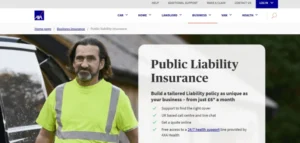
AXA remains a strong option for sole traders, professionals, retailers, tradespeople and other smaller businesses wanting to arrange cover directly.
Its business insurance range includes public liability, employers’ liability, professional indemnity and contents insurance, alongside occupation-specific options.
AXA currently advertises public liability insurance from around £6 per month for qualifying businesses. Public liability limits can reach as high as £10 million for eligible occupations, while employers’ liability policies provide £10 million of cover.
Professional indemnity cover is also available, with limits varying according to occupation.
Why Consider AXA?
- Direct online business insurance
- Public liability cover
- Employers’ liability cover
- Professional indemnity
- Business contents
- Equipment and tools options for relevant trades
- Flexible cover depending on occupation
Best Suited To
AXA can suit owners who want an established insurer with the ability to combine several conventional SME covers without necessarily going through a broker.
2. Hiscox Business Insurance
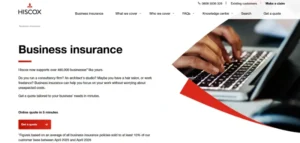
Hiscox has a particularly strong focus on professional and service-based companies.
Its business insurance can include professional indemnity, public liability, employers’ liability, cyber, property and business interruption insurance depending on the customer’s requirements.
Hiscox currently advertises small business insurance quotes from £7.20 per month, although the actual premium depends on business size, location, activities and cover limits.
The insurer says it provides insurance to more than 460,000 UK businesses.
Why Consider Hiscox?
- Strong professional indemnity offering
- Public and employers’ liability options
- Cyber insurance
- Commercial property options
- Business interruption insurance
- Online quotation
- Business support resources
Best Suited To
Consultants, accountants, IT businesses, agencies, creatives and other professional service businesses may find Hiscox particularly relevant.
3. Markel Direct
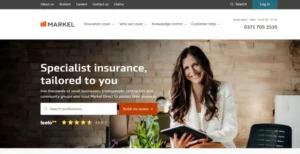
Markel Direct provides specialist small business insurance covering professionals, contractors, freelancers, tradespeople and other self-employed businesses.
Its current insurance range includes public liability, professional indemnity, employers’ liability, directors’ and officers’ insurance, occupational personal accident, cyber and data insurance and tools insurance.
Public liability is currently advertised from £5 per month for £1 million of cover, while professional indemnity is advertised from around £8 per month.
One notable element is the legal support accompanying its business insurance offering, including a 24-hour legal advice helpline.
Why Consider Markel Direct?
- Public liability
- Professional indemnity
- Employers’ liability
- Cyber and data insurance
- Directors’ and officers’ insurance
- Tools insurance
- Legal advice support
- Online quotes
Best Suited To
Markel Direct is particularly relevant to consultants, contractors, freelancers and SMEs that value access to legal support alongside insurance.
4. Superscript
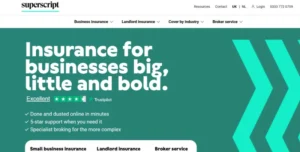
Superscript has positioned itself around flexible digital business insurance.
Businesses can select from individual covers rather than relying only on a fixed package. Available products include public liability, employers’ liability, professional indemnity, business equipment, business interruption and cyber insurance.
For public liability, businesses can currently choose limits of £1 million, £2 million or £5 million, and the company advertises entry-level public liability quotes from around £5 per month.
Superscript also has specialist brokerage services for more complex high-growth technology companies.
Why Consider Superscript?
- Digital quotation and policy management
- Flexible public liability limits
- Employers’ liability
- Professional indemnity
- Business equipment
- Cyber cover
- Business interruption
- Specialist options for scaling technology companies
- Policy adjustments without administration fees on qualifying policies
Best Suited To
Superscript can make sense for digital agencies, freelancers, technology companies, startups and businesses that prefer managing insurance online.
5. Simply Business
Simply Business differs from a traditional single insurer because it operates as an insurance intermediary, allowing businesses to compare policies from a panel of insurers.
This makes it particularly useful for owners who want to see several options rather than obtaining individual quotations separately.
Its business insurance range can include public liability, employers’ liability, professional indemnity, tools, stock, business equipment and legal expenses depending on the business.
For January to June 2026, Simply Business reported public liability quotes from the equivalent of £5.40 per month for the lowest-priced 10% of customers meeting the stated criteria. Professional indemnity is currently advertised from £6.90 per month under similar qualifying-price methodology.
Why Consider Simply Business?
- Compares multiple insurance providers
- Wide range of trades
- Public liability
- Employers’ liability
- Professional indemnity
- Tools and equipment options
- Online comparison and purchase
Best Suited To
Owners primarily interested in comparing prices and cover from several insurers through one quotation process.
6. PolicyBee

PolicyBee is an online commercial insurance broker focusing on small businesses, freelancers and professional service companies.
It provides access to covers including professional indemnity, public liability, employers’ liability, cyber, directors’ and officers’ insurance and commercial property.
A current published example prices £1 million of public liability insurance from £8.40 per month for a specified IT services business with annual income up to £25,000. That should be viewed as an illustrative profile rather than a universal minimum price.
Why Consider PolicyBee?
- Online quotations
- Broker assistance
- Public liability
- Employers’ liability
- Professional indemnity
- Cyber insurance
- Directors’ and officers’ insurance
- Commercial property options
Best Suited To
Consultants, agencies, freelancers, IT companies, therapists and other service businesses wanting online convenience with access to human broker support.
7. Aviva Business Insurance
Aviva remains one of the major names in UK commercial insurance, but an important change needs to be understood when comparing it with direct online providers.
Its core public liability, employers’ liability and professional indemnity products are no longer available to purchase directly from Aviva for new business.
Instead, these and other commercial covers are generally available through insurance brokers.
Aviva still offers business-related products directly in areas such as business vehicle and van insurance, while broader commercial protection can include buildings, contents, equipment, business income, employers’ liability, professional indemnity and public liability through brokers.
Why Consider Aviva?
- Large established insurer
- Broad commercial insurance range
- Property and equipment cover
- Business income protection
- Liability insurance through brokers
- Professional indemnity through brokers
- Commercial motor products
Best Suited To
SMEs comfortable working with an insurance broker and businesses needing a broader established commercial insurance provider rather than purely self-service online cover.
8. Allianz Commercial
Allianz offers a broad SME insurance proposition, but its commercial small-business products are principally distributed through brokers and insurance intermediaries rather than as a simple direct-to-consumer online policy.
Its SME product range includes packages for businesses, offices, retailers, contractors and property owners, alongside professional indemnity and directors’ and officers’ insurance.
Allianz’s QuoteSME platform is designed for brokers and provides digital quotation, policy purchase, amendments and renewals.
Why Consider Allianz?
- Broad SME product range
- Business packages
- Office insurance
- Retail cover
- Contractor insurance
- Professional indemnity
- Directors’ and officers’ insurance
- Property owner products
- Broker underwriting support
Best Suited To
Businesses that prefer broker advice or have a more complicated commercial insurance requirement that may benefit from specialist underwriting.
9. Zurich Business Insurance
Zurich provides an extensive range of SME commercial insurance, with many products accessed through brokers using Zurich Online or other broker trading platforms.
Its SME proposition generally caters for businesses with turnover of up to £5 million, although eligibility depends on the particular insurance product.
Available SME products cover areas including shops, offices, surgeries, contractors, tradespeople, commercial combined insurance and property owners.
For example, Zurich’s Commercial Combined proposition can accommodate qualifying UK businesses with up to ten locations and £5 million turnover.
Why Consider Zurich?
- Commercial combined insurance
- Shop and retail policies
- Contractor insurance
- Office and surgery packages
- Public and products liability
- Employers’ liability
- Property insurance
- Business interruption
- Risk management support
Best Suited To
Growing companies, contractors, retailers and SMEs whose insurance requirements are becoming too complex for a basic direct online policy.
10. Kingsbridge Contractor Insurance
Kingsbridge is more specialised than most providers in this comparison.
Its core focus is contractors, freelancers and independent professionals rather than the whole SME market.
The standard contractor package combines several covers including professional indemnity, public liability, employers’ liability, directors’ and officers’ liability and personal accident protection.
Its published combined package currently provides £1 million professional indemnity, £5 million public liability and £10 million employers’ liability, alongside other included protections.
Kingsbridge also offers specialist IR35 Protect insurance as an optional product. Depending on the version selected, this can provide up to £100,000 for relevant taxes, interest and penalties arising from an insured IR35 enquiry, alongside legal-expenses protection.
Why Consider Kingsbridge?
- Contractor-focused insurance
- Professional indemnity
- Public liability
- Employers’ liability
- Directors’ and officers’ cover
- Personal accident protection
- Retroactive professional indemnity cover
- Optional IR35 protection
- Cyber cover options
Best Suited To
IT contractors, consultants, freelancers and limited company professionals who want insurance specifically structured around contractor risks.
Comparison Table: Best Small Business Insurance Providers UK 2026
| Provider | Best For | Current Pricing Position | Main Route |
| AXA | General SMEs and trades | Public liability from around £6/month | Direct |
| Hiscox | Consultants and professional services | Business insurance from £7.20/month | Direct |
| Markel Direct | Contractors and professional SMEs | Public liability from £5/month | Direct |
| Superscript | Startups and digital businesses | Public liability from around £5/month | Direct/Online |
| Simply Business | Comparing several insurers | Public liability from £5.40/month for qualifying customers | Broker/Comparison |
| PolicyBee | Freelancers and service businesses | Published PL example from £8.40/month | Broker |
| Aviva | Established SMEs | Quote-based | Mainly Broker |
| Allianz | SMEs requiring broker-arranged cover | Quote-based | Broker |
| Zurich | Growing and more complex SMEs | Quote-based | Broker |
| Kingsbridge | Contractors and freelancers | Quote-based | Specialist Direct |
Advertised prices are examples rather than guaranteed premiums. Quotes depend on the business, turnover, occupation, number of employees, location, limits, claims history and other underwriting factors.
What Should You Check Before Buying Business Insurance?
Before accepting a quote, compare the actual policy documents rather than relying only on the headline price.
Check:
- Who is insured
- Business activities covered
- Public liability limit
- Employers’ liability limit
- Professional indemnity limit
- Policy excess
- Geographic limits
- Subcontractor requirements
- Previous-work cover
- Cybersecurity conditions
- Property valuations
- Tools theft conditions
- Business interruption indemnity period
- Claims notification requirements
- Cancellation conditions
- Monthly payment charges
You should also update your insurer if the business changes materially.
Examples include:
- Hiring employees
- Opening another location
- Increasing turnover significantly
- Starting a new type of work
- Working overseas
- Purchasing expensive equipment
- Moving premises
- Selling new products
- Handling significantly more customer data
Failing to disclose important changes could affect whether a future claim is covered.
Conclusion
Choosing the right small business insurance UK provider in 2026 means matching insurance to the risks your company actually faces rather than automatically selecting the cheapest advertised premium.
Direct providers such as AXA, Hiscox, Markel Direct and Superscript can suit relatively straightforward SMEs wanting to arrange cover online. Simply Business and PolicyBee provide broker or comparison-led alternatives, while Aviva, Allianz and Zurich may make more sense for companies comfortable arranging broader commercial cover through an intermediary.
Kingsbridge stands out as a more specialist option for contractors and independent professionals.
Whichever provider you consider, compare the policy limits, exclusions, excess, insured activities and claims requirements carefully. Review the cover at least once a year and whenever your business changes significantly so that the insurance continues to reflect the risks you actually face.
FAQs About Small Business Insurance in the UK
Which Insurance Is Legally Required for Small Businesses in the UK?
Employers’ Liability Insurance is normally compulsory for businesses employing people, subject to limited exemptions. Employers generally need at least £5 million of cover from an authorised insurer.
How Much Does Small Business Insurance Cost in 2026?
Some low-risk individual policies are advertised from around £5 to £8 per month, but there is no standard average. Industry, turnover, staff, claims history, location and the types of insurance selected can all substantially change the premium.
Do Startups Need Business Insurance From Day One?
Not every startup needs every type of insurance immediately, but cover should be arranged as soon as the relevant risk exists. Hiring staff, providing professional advice, meeting customers, holding stock or signing client contracts can create an early need for insurance.
Is Public Liability Insurance Compulsory in the UK?
Public liability is not generally compulsory for most businesses, although particular industries, clients, venues and commercial contracts may require it. It is particularly important for businesses interacting with customers or members of the public.
What Insurance Should a Consultant or Freelancer Have?
Professional indemnity is often particularly relevant because it protects against certain claims involving mistakes, negligence or professional advice. Public liability, cyber and equipment insurance may also be appropriate depending on how the business operates.
Does Business Insurance Cover Cyber Attacks?
Standard business insurance does not necessarily include comprehensive cyber protection. Businesses concerned about ransomware, data breaches, system restoration or cyber-related interruption should check whether they need separate cyber insurance.
How Often Should Small Business Insurance Be Reviewed?
Review business insurance at least annually and whenever there is a significant change to employees, turnover, premises, services, equipment, contracts or business activities. Updating cover promptly reduces the risk of becoming underinsured or having activities that fall outside the policy.

Blogger | Business Writer | Sharing startup advice on UK business blogs
Related Articles in Finance
View All →
If I Take Home £1,600 a Month, What Is My Salary in the UK?
If an employee takes home £1,600 per month in the UK, their estimated gross salary is approximately £21,780 per year. This is equal to about £1,815 per month…

Why the Two Year Accounts Rule is Not Actually a Rule?
Ask most new business owners when they can first apply for a mortgage and the answer comes back the same way every time: two years of accounts, minimum,…

Snap-on Franchise Cost: Fees, Investment and Earnings
The Snap-on franchise cost in the UK is currently quoted at £166,597 to £168,487 for the franchise investment, with Snap-on stating that a new franchisee may need to…